South Korea's car trade deficit with China hits a record $4.23 billion, driven largely by China-made Teslas
Korea's car imports from China jumped 79.2% to $4.39 billion in January to October, while exports fell 34.9%. Yonhap attributes the record deficit largely to Tesla EVs made in Shanghai.
Key facts
- South Korea's deficit in car trade with China reached a record $4.23 billion in January to October 2026, according to Korea International Trade Association data reported by Yonhap.
- Car imports from China rose 79.2% to $4.39 billion, while exports to China fell 34.9% to $168.77 million. Yonhap says the gap is largely due to Tesla EVs built in Shanghai.
- Tesla registered 98,313 cars in Korea over the period, up 105%, according to the importers' association, giving it more than 30% of the imported-car market, per Seoul Economic Daily and ChosunBiz.
South Korea’s deficit in car trade with China has reached a record, and Tesla is the main reason given. In the first ten months of 2026 the deficit hit $4.23 billion, Yonhap reported on 22 November, citing data from the Korea International Trade Association (KITA) and the trade ministry. Yonhap says the widening gap is “largely attributed” to strong sales of Tesla electric vehicles made at the company’s Shanghai Gigafactory.
The trade figures
According to Yonhap, South Korea exported $168.77 million of cars to China from January to October, down 34.9% from a year earlier. Imports of cars from China rose 79.2% to $4.39 billion. That produces the $4.23 billion deficit.
Seoul Economic Daily and ChosunBiz both say that is 92.7% higher than a year earlier and about 6 trillion won, and that it already exceeds the full-year deficit of $2.51 billion last year. Seoul Economic Daily says imports were 26 times exports. Korea has run a car trade deficit with China every year since 2017, Yonhap says. It gives $466 million in 2022, $943 million in 2023 and $1.73 billion in 2024.
What Tesla’s numbers show
The Korea Automobile Importers & Distributors Association (KAIDA) says 98,313 new Teslas were registered in Korea from January to October, 105% more than a year earlier. Seoul Economic Daily and ChosunBiz say that gives Tesla more than 30% of the imported-car market. They report that the Model Y was the best-selling import, at 78,631 units, and ChosunBiz says Tesla topped monthly imported-car sales for nine months in a row.
Seoul Economic Daily says most Teslas sold in Korea are made at the Shanghai plant. None of the reports gives the exact share of Tesla’s Korean sales that came from Shanghai, or the dollar value of Tesla imports within the $4.39 billion, so the link between Tesla and the deficit is the reports’ attribution rather than a measured split.
Other Chinese carmakers
BYD, which entered Korea last year, sold more than 20,000 cars through October, according to all three reports. Yonhap says Polestar also sells China-made EVs there. Seoul Economic Daily adds that Zeekr has begun sales and that Xpeng is preparing to enter. It also says China overtook Germany in the first half of the year as the largest source of imported cars. ChosunBiz, citing industry statistics, says China-made vehicles went from 1.1% of Korea’s EV market in 2021 to 33.9% in 2025.
Domestic makers and policy
Seoul Economic Daily says domestic sales by Korean carmakers fell 7.2% to 1,043,729 units in the first ten months, while imported-car sales rose 23.3% to 325,542. It says industry officials worry that growing Chinese EV sales could lead local carmakers and suppliers to cut investment and jobs, and that lawmakers have introduced bills to extend a domestic-production tax credit to EVs and other next-generation cars. The government is reviewing related support, the paper says.
The paper also compares tariffs: it says the US charges duties of up to 127.5% on Chinese EVs and the EU up to 45.3%, while Korea’s basic rate on imported passenger cars is 8%. That comparison appears only in Seoul Economic Daily, and we have not checked it.
Notes on the sources
- Wording. Yonhap says the Tesla link is “largely attributed”. Seoul Economic Daily and ChosunBiz say Tesla “drove” the rise.
- Sales vs registrations. Yonhap says Teslas were “sold” and the other two say “registered”. The figure is the same.
- Translation. Seoul Economic Daily and ChosunBiz state that their English versions are AI-translated from Korean, so some wording may differ from the originals.
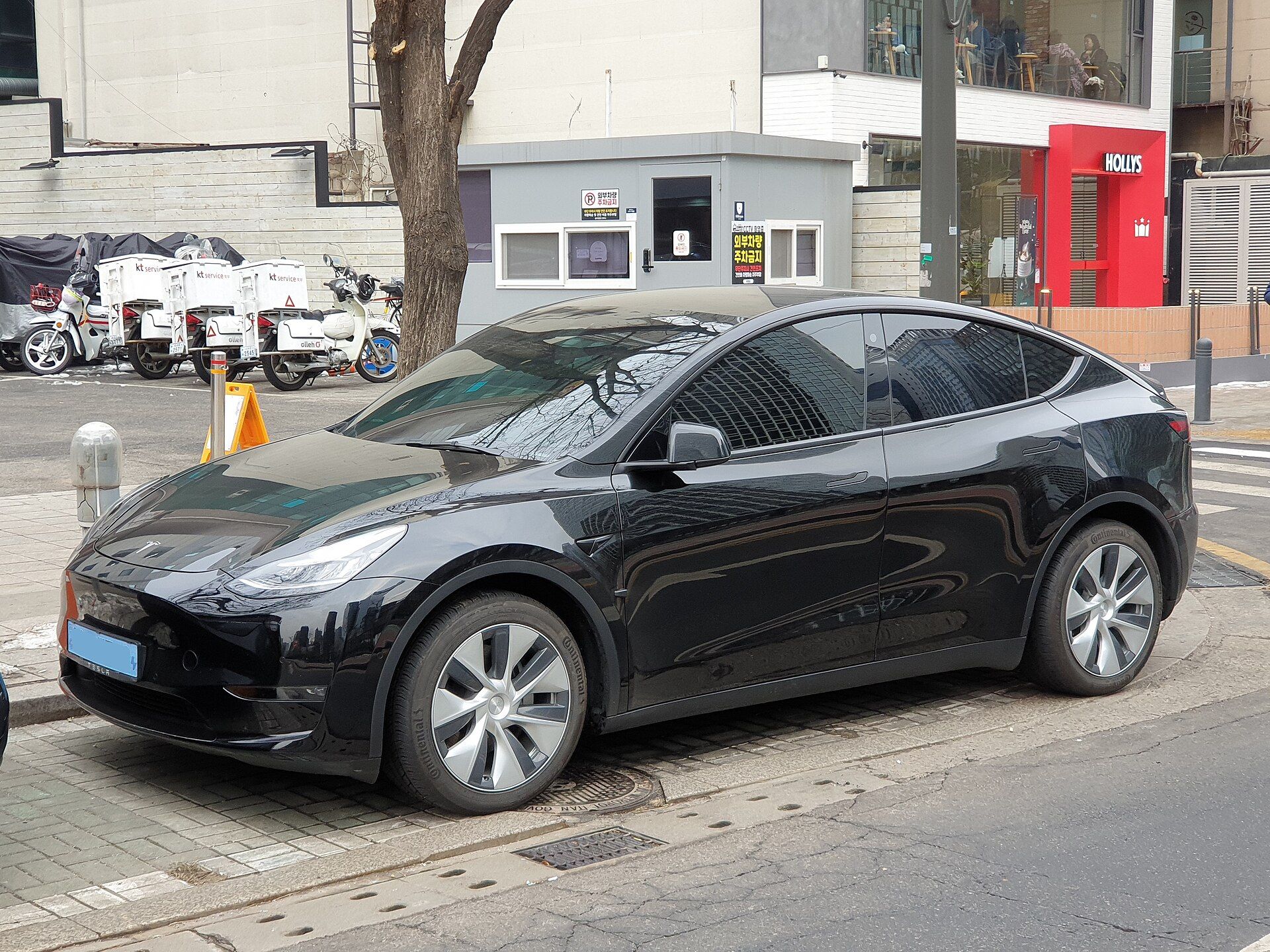
Charged Times compiled this report from Yonhap, Seoul Economic Daily and ChosunBiz, all published on 22 November 2026. The cover photo shows a Model Y in Seoul and is representative only.
Frequently asked questions
How big is South Korea's car trade deficit with China?
A record $4.23 billion in January to October 2026, up 92.7% from a year earlier, according to Korea International Trade Association data reported by Seoul Economic Daily and ChosunBiz. Yonhap also calls it a record.
How many Teslas were sold in South Korea?
98,313 new Teslas were registered from January to October 2026, up 105% on a year earlier, according to the Korea Automobile Importers & Distributors Association.
Are all Teslas sold in Korea made in China?
Seoul Economic Daily says most Tesla cars sold in Korea are built at Tesla's Shanghai Gigafactory. Yonhap says the widening deficit is largely attributed to those China-made Teslas.
Sources
- Yonhap: S. Korea's car trade deficit with China hits record on Tesla EV imports (22 Nov 2026) (en.yna.co.kr)
- Seoul Economic Daily: Korea's auto trade deficit with China hits record on Tesla imports (22 Nov 2026) (en.sedaily.com)
- ChosunBiz: China-made Teslas drive Korea's auto trade deficit with China to record high (22 Nov 2026) (biz.chosun.com)
Related stories
Tesla opens its first Argentina store, with Shanghai-built Model 3 and Model Y from US$41,590
Tesla opened a Buenos Aires mall store on 20 November and began online orders. Prices run from US$41,590 to US$54,590, within a duty-free quota of 50,000 electric and hybrid vehicles a year.
China's NEV share hits a record 67.5% in October, even as sales fall for a 10th month
China's passenger new-energy vehicle retail sales fell 13.7% year on year to 1.109 million in October, but the overall car market fell faster, pushing NEV penetration to a record, according to the CPCA.
Musk says Tesla plans a driverless Model Y with no steering wheel or pedals, but gives no timeline
Speaking at the New York Times DealBook Summit, Elon Musk described a planned autonomous Model Y for groups of six or seven. He gave no date, price or production location.