Tesla starts rolling out FSD v15 with a new Reality View and a '25x' claim that comes with no baseline
Tesla began sending FSD (Supervised) v15 to its first customers on 21 November, with better sign, pothole and school-zone handling. It cites a 25x better critical intervention rate but gives no underlying number.
Key facts
- Tesla began rolling out FSD (Supervised) v15 on 21 November. Teslarati reports the first builds are going to Early Access Program members, and Elon Musk has said a wide release will follow in December.
- Tesla says the new vision encoder improves the critical intervention rate by 25x. It gives only the multiplier, not the starting rate or the resulting rate.
- The release adds Reality View, a live visualisation of the drive, and Tesla says it improves detection of road signs, potholes and debris and speed handling in school zones.
Tesla has started rolling out version 15 of its Full Self-Driving (Supervised) software. The first builds went to a small group of customers on 21 November, after Tesla announced the rollout on X, according to Electrek. The company headlines a “25x” safety claim and a new live visualisation called Reality View. FSD (Supervised) still requires the driver to pay attention and be ready to take over, as TeslaNorth points out.
Who gets it, and when
Teslarati reports that Tesla is sending the first v15 builds to members of its Early Access Program. It says Elon Musk said earlier on 21 November that FSD v15 goes to wide release in December, with the 2026 Holiday Update. TeslaNorth says Tesla’s AI software chief Ashok Elluswamy confirmed the first wave, and that Tesla has not said how many people received it or which regions are first.
The sources are less clear on hardware. Electrek says Tesla did not state which vehicles get v15 first, but notes that the company has told investors its AI4 computer, also called HW4, is enough to run it. TeslaNorth says Tesla has previously described v15 as built for AI4, with older HW3 cars on a separate software branch. We could not find a Tesla statement that the first wave is limited to HW4 cars, so we treat that as likely but unconfirmed.
The “25x” claim
Tesla’s release notes say a new vision encoder, shared between FSD, Robotaxi and Optimus and trained on millions of internet videos, improves the “critical intervention rate by 25x”. In its announcement Tesla wrote “25x better handling of safety critical cases”.
That is a multiplier only. Tesla has not published the rate it started from or the rate it reached, so the claim cannot be independently checked. Electrek makes the same point and adds that Tesla still does not publish disengagement data. TeslaNorth stresses that this is Tesla’s own intervention metric, not a finding that the software is 25 times safer.
Reality View
Tesla describes Reality View as a real-time generative visualisation that streams a view from a virtual camera above the car, so the driver can see what FSD plans to do. Drivers can choose a full-screen view, the map or a split screen, or a quiet mode, according to Teslarati’s copy of the notes. Upcoming turns appear in the visualisation. Electrek says the release notes call the same feature “Tesla Augmented Reality” and say it replaces separate model signals with a single end-to-end visualisation that uses less total compute.
What else the release notes list
- Signs, animals and debris. Improved detection of road signs, small animals, road debris and chains.
- Road hazards. Improved detection of potholes and road details, and avoidance of deep standing water.
- Speed handling. Improved speed handling for each driver profile, in school zones and for speed limits, and in bad weather.
- Speed cameras. FSD (Supervised) can slow down when it detects a speed camera. Pressing the accelerator or raising the speed profile cancels it, and cancelling twice at the same camera saves the location.
- Bike Rack Mode. FSD can be used with a bike rack or similar hitch accessory. It pulls over near the destination and does not reverse.
- Navigation and parking. Navigation learns from fleet route preferences, at the start and end of trips for now, with later v15 releases to cover the whole route. Parking suggestions use personal parking history and show several options at the destination.
- Driver monitoring. Vision-based attention monitoring works with hats and sunglasses more often, and Tesla says it is decreasing strictness in higher-speed driver profiles. Electrek calls this a change that goes in the other direction from Tesla’s other safety claims.
Why those areas
Electrek says the list reads like FSD’s best-known weaknesses. It cites a September test by Brussels nonprofit Johanna.be, which found FSD exceeded the limit in 55% of 30 km/h zones it drove through, and a U.S. NHTSA review of a petition about Tesla’s robotaxis in school zones. Electrek says “improved detection” does not tell us how much better the car is. We have not independently tested v15, and none of Tesla’s claims has yet been confirmed by outside testing.
Where the sources differ
- First recipients. Teslarati says Early Access Program members. Electrek says Tesla did not name which vehicles get it first. TeslaNorth says only “first group of customers”.
- HW4. No source says the first wave is HW4-only. Electrek and TeslaNorth say v15 is built for or can run on AI4.
- Wide release. The December date comes from Musk’s post, as reported by Teslarati and TeslaNorth, not from Tesla’s release notes.
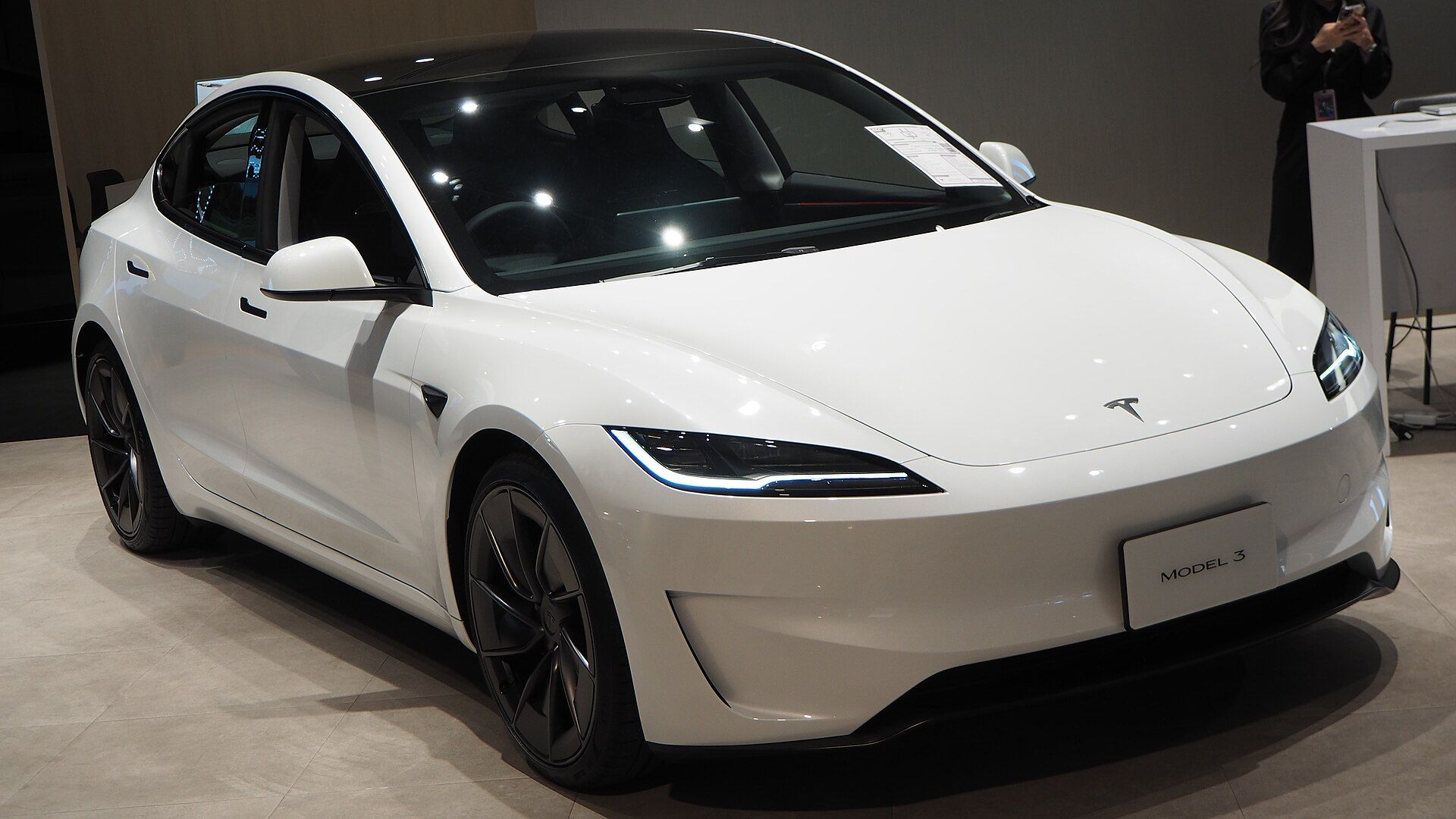
Charged Times compiled this report from Electrek, Teslarati and TeslaNorth. The cover photo shows a Tesla Model 3 and is representative only; it does not show FSD v15.
Frequently asked questions
What does Tesla's '25x' claim for FSD v15 mean?
Tesla's release notes say the upgraded vision encoder improves the critical intervention rate by 25x. Tesla has not published the baseline rate or the new rate, so the claim cannot be checked, as Electrek notes.
Who gets FSD v15 first, and when is the wide release?
Teslarati reports that the first builds are going to Early Access Program members. Tesla has not said how many drivers or which regions, according to TeslaNorth. Elon Musk has said a wide release will come in December.
What is Reality View?
Tesla describes it as a real-time generative visualisation of the drive, shown from a virtual camera above the car, that lets drivers see what FSD plans to do. It can be shown full-screen, with the map or in a split view.
Sources
- Electrek: Tesla launches FSD v15, targets its biggest weaknesses, from signs to potholes (21 Nov 2026) (electrek.co)
- Teslarati: Tesla Full Self-Driving v15 rollout begins: full release notes and improvements (21 Nov 2026) (teslarati.com)
- TeslaNorth: Tesla Starts Rolling Out FSD v15 With a New Reality View (21 Nov 2026) (teslanorth.com)
Related stories
Italy gives provisional approval to Tesla Assisted Driving, the supervised system once called FSD
Transport Minister Matteo Salvini announced the approval on 20 November, ahead of an EU-wide decision. Italy is the first large EU market to allow the system, and drivers must keep supervising it.
South Korea's car trade deficit with China hits a record $4.23 billion, driven largely by China-made Teslas
Korea's car imports from China jumped 79.2% to $4.39 billion in January to October, while exports fell 34.9%. Yonhap attributes the record deficit largely to Tesla EVs made in Shanghai.
Tesla opens its first Argentina store, with Shanghai-built Model 3 and Model Y from US$41,590
Tesla opened a Buenos Aires mall store on 20 November and began online orders. Prices run from US$41,590 to US$54,590, within a duty-free quota of 50,000 electric and hybrid vehicles a year.